The End of SaaS: Why Every Company Is Becoming an Autonomous System
For two decades, software followed a simple model: humans use tools. That model is breaking. A new paradigm is emerging, one where AI agents execute entire workflows, and companies pay for outcomes instead of access.

The autonomous enterprise: AI agents execute workflows while humans focus on strategy and oversight.
From Interfaces to Outcomes
Traditional SaaS sells access to functionality. CRM systems to manage relationships. Marketing platforms to send campaigns. Analytics dashboards to interpret performance.
But in every case, the software depends on human input. Someone has to log in, click buttons, move data from one system to another, interpret results, and decide what to do next.
The bottleneck is not the tool. The bottleneck is the operator.
Agent-as-a-Service (GaaS) removes that bottleneck entirely. Instead of selling software that humans operate, companies deploy AI agents that execute entire workflows autonomously:
The Core Shift
SaaS sells interfaces. GaaS sells outcomes. The user no longer operates the system. The system operates itself.
SaaS vs. GaaS: What Actually Changes
| Dimension | SaaS (Old Model) | GaaS (New Model) |
|---|---|---|
| Core unit | Human labor | Machine execution |
| User interaction | Clicks buttons, reads dashboards | Sets goals, reviews outcomes |
| Pricing model | Per seat ($50/user/month) | Per outcome ($X per lead, per ticket) |
| Value delivery | Access to functionality | Completed tasks and measurable results |
| Scalability | Hire more people | Deploy more agents |
| Optimization | Train employees | Tune agent memory and policies |
| Accountability | Manager oversight | Audit logs and control planes |
The Rise of the Autonomous Enterprise

This shift represents something much bigger than a new product category. It represents a new organizational model: the company as a system.
When NVIDIA CEO Jensen Huang says “every SaaS company will become GaaS,” he’s describing a world where labor is replaced with intelligent agents, decisions are assisted, or made, by AI, and execution happens continuously rather than manually.
What emerges is not software. What emerges is an autonomous organization.
The Real Architecture Stack
The correct architecture for autonomous systems, not the Instagram version:
Interface Layer
Dashboards, approvals, human overrides, still exists
Agent Layer
AI roles that execute workflows and coordinate tasks
Tool Layer
Existing SaaS (Stripe, HubSpot, Gmail) as agent tools
Model Layer
OpenAI, Anthropic, and specialized AI models
Compute Layer
NVIDIA GPUs, data centers, the AI factories
The Missing Layer: Control
Most discussions around AI agents focus on capability. But capability alone is not enough. Autonomy without control is chaos.
To operate reliably, autonomous systems require a control plane, the governance layer that transforms AI from a tool into infrastructure:
Visibility
Real-time dashboards showing every agent action, performance metrics, and system health
Guardrails
Policy-based autonomy levels, what agents can do alone vs. what requires approval
Cost Control
Per-agent budget caps, API cost tracking, and rate limits to prevent runaway spending
Audit Trail
Complete log of every decision, every action, every outcome, regulatory-grade accountability
Circuit Breakers
Automatic failure detection, retry logic, and model fallback when services degrade
Memory
Persistent learning, agents remember what works for each client and improve over time
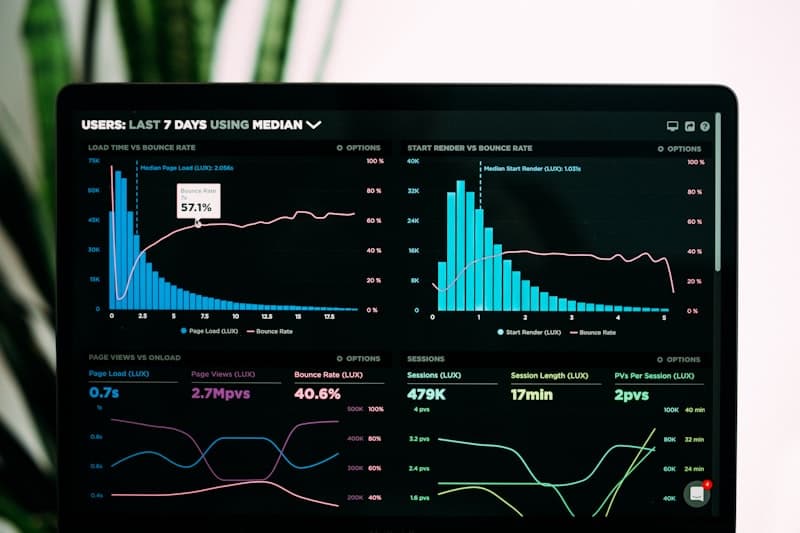
This control layer is where enterprise money lives. Most companies building AI agents are ignoring it, focused entirely on capability while leaving reliability, governance, and cost control as afterthoughts. The companies that get the control plane right will win.
Why Most Companies Will Get This Wrong
The majority of companies approaching AI today are doing one of two things:
Mistake 1: Feature bolting
Adding AI features to existing SaaS products, a chatbot here, an autocomplete there, without rethinking the fundamental model.
Mistake 2: Isolated automation
Automating individual workflows without system-level thinking, no monitoring, no guardrails, no outcome tracking, no memory.
The real opportunity is not to enhance software. It is to replace execution.
The AI Workforce: From Agents to Roles
The most effective way to understand autonomous systems is not in technical terms. It’s in human terms. Every AI agent maps to a role that a person used to fill:
| Department | AI Role | What It Does |
|---|---|---|
| Sales | AI SDR | Finds prospects, researches companies, sends personalized outreach at scale |
| Sales | AI Nurture Specialist | Manages follow-up sequences, detects hot leads, triggers proposals |
| Marketing | AI Content Team | Writes SEO-optimized articles, distributes to subscribers |
| Marketing | AI SEO Analyst | Tracks keyword rankings, monitors competitors, reports on visibility |
| Operations | AI Workflow Manager | Deploys and monitors automations, detects failures, manages reliability |
| Executive | AI Executive Reporter | Compiles weekly/monthly performance reports for leadership |

A New Economic Model
SaaS is priced per seat. GaaS is priced per outcome. This fundamentally changes how value is measured and how software is monetized.
Outcome-Based Pricing Examples
$50
Qualified lead generated
$500
Discovery call booked
$150
Content piece published
$15
Support ticket resolved
$75
Hour of manual work saved
$5,000
Deal closed (attributed)
When a company can show that its AI workforce generated $47,000 in attributed value last month against $2,000 in API costs, a 23x ROI, the conversation about pricing changes entirely. You’re no longer selling software. You’re selling results.
What Comes Next
We are at the beginning of a transition from human-operated companies to AI-operated systems. Let’s be precise about what’s actually happening:
SaaS will add agent layers, the best tools will become AI-operated
Some SaaS will die, replaced by agent-native solutions built from day one
New companies will be agent-native, no dashboards to operate, just outcomes to measure
The control plane becomes the competitive moat, not the AI models themselves
The future of software is not software.
It is autonomous execution.
Frequently Asked Questions
What is Agent-as-a-Service (GaaS)?
Agent-as-a-Service is a model where AI agents autonomously execute business workflows, finding prospects, sending outreach, creating content, monitoring performance, without requiring human operation. Unlike SaaS which sells access to tools, GaaS sells outcomes.
How is GaaS different from SaaS?
SaaS sells interfaces that humans operate. GaaS sells outcomes that AI agents deliver. SaaS is priced per seat; GaaS is priced per outcome (cost per lead, cost per resolved ticket). The fundamental shift is from human execution to machine execution.
What is an AI control plane?
An AI control plane is the governance layer that makes autonomous AI systems reliable. It includes real-time monitoring, policy-based guardrails, cost tracking, audit logs, and human override capabilities. Without a control plane, autonomous AI is unpredictable.
Is this the same as RPA (Robotic Process Automation)?
No. RPA automates repetitive, rule-based tasks by mimicking human clicks. GaaS agents are intelligent, they make decisions, adapt to context, learn from outcomes, and handle complex multi-step workflows that require reasoning, not just repetition.
Ready to See What Autonomous Operations Look Like?
Take our free AI Automation Assessment to discover where AI agents can replace manual execution in your business, with specific ROI projections and a recommended starting point.